
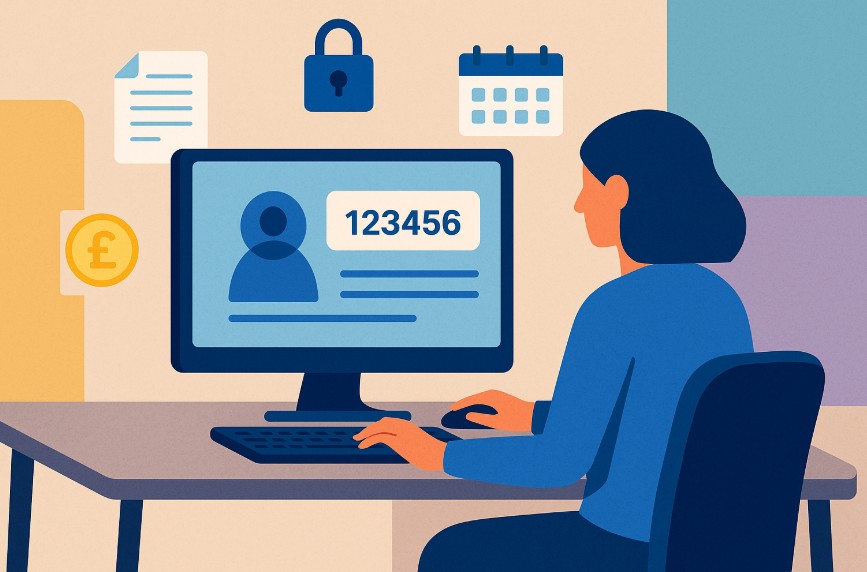
A payroll number is more than just an internal code, it’s a fundamental part of a company’s payroll infrastructure. In the UK, where accurate payroll processing and data protection are critical, assigning each employee a unique payroll number helps employers manage sensitive information efficiently and securely.
Though not a legal requirement, payroll numbers are widely adopted across organisations of all sizes for their ability to streamline operations, minimise human error, and support compliance with regulations such as GDPR and HMRC reporting obligations.
This article provides an in-depth overview of payroll numbers, detailing their structure, purpose, practical uses, and how they differ from other financial identifiers such as PAYE reference numbers and RTI numbers.
What Is a Payroll Number?
A payroll number, also referred to as a payroll ID or employee payroll reference, is a unique identifier assigned to each employee by their employer. It typically comprises a string of digits, letters, or a combination of both, and is used specifically for payroll purposes.
Unlike a National Insurance number (issued by the government) or an employee ID (which might be used for internal company purposes), the payroll number is tailored for use in salary calculations, deductions, and statutory submissions.
The main function of a payroll number is to streamline the processing of employee wages, tax deductions, and financial reporting. For organisations with a large number of employees, payroll numbers provide a way to manage complex data sets with accuracy and security.
Although not a legal requirement in the UK, most employers choose to assign payroll numbers as a best practice. These numbers help minimise human error, ensure confidentiality of employee data, and support compliance with data protection regulations.
How Are Payroll Numbers Created and Structured?

Payroll numbers can be created either manually by the payroll or HR department or automatically by payroll software. There are no mandatory rules regarding their format, but companies are encouraged to use a consistent structure to avoid duplication or confusion.
Some employers prefer a simple numeric sequence to track the order of employees’ hire dates, while others incorporate alphabetic elements, departmental prefixes, or job-role indicators to make the ID more informative. The format depends entirely on the internal needs of the business and the complexity of its payroll system.
Common Formatting Examples for Payroll Numbers
Format Type | Example | Description |
Sequential Digits | 0001234 | Employees are numbered in order of joining |
Alphabetic Representation | SMITHJ | Based on the employee’s surname |
Alphanumeric Combination | AB12-3456 | Balances clarity and uniqueness |
Departmental Prefix | FIN-7890 | Indicates department of employment |
Hybrid (Prefix + Sequence) | HR-0123 | Useful in large companies with multiple units |
Some payroll software platforms like TunedIn Payroll automate this process and assign formatted numbers based on predefined rules. Using software helps reduce the chances of duplicates and supports consistency across the system.
Where to Find Payroll Number on Payslip?
In most UK organisations, the payroll number can be found directly on the employee’s payslip, which is typically issued monthly or weekly. It is usually placed at the top of the slip near the employee’s name, National Insurance number, or other identifiers.
Depending on the payroll software or payslip template used, the payroll number might also appear at the bottom of the document or alongside tax-related information. Companies that offer digital payslips via online HR portals or mobile apps usually display the payroll number in the employee’s profile section.
If the number is not visible on the payslip, employees can request it from the HR or payroll department. Alternatively, they may also find it on documents such as P45s, P60s, employment contracts, or offer letters.
How Can You Find a Payroll Number Without a Payslip?
There are various ways to retrieve your payroll number when you don’t have access to a current payslip. Some employees may need it for administrative purposes, pension applications, or tax inquiries.
To locate your payroll number without a payslip, consider the following:
- Contact the employer or HR department: This is the most direct and reliable method.
- Access the online HR or payroll portal: Many UK employers use platforms that allow employees to view their personal payroll information.
- Check other official documents: Tax forms such as the P45, P60, or company onboarding documents may also list the payroll number.
It’s essential to keep this number confidential and not share it publicly, as it may be linked to sensitive employment and financial data.
What Is the Difference Between a Payroll Number, a PAYE Reference, and an RTI Number?
Understanding the distinctions between these identifiers is crucial, particularly when communicating with HMRC or using payroll software.
Key Differences
Identifier | Assigned By | Purpose | Example |
Payroll Number | Employer | Tracks individual employees in payroll system | HR-001234 |
PAYE Reference | HMRC | Identifies the employer for tax purposes | 123/AB12345 |
RTI Number/Payroll ID | Employer/HMRC | Used in real-time tax submissions (FPS reports) | TunedIn-CJB-001-100123 |
The PAYE reference number is issued by HMRC to employers when they register for PAYE. It consists of a three-digit tax office code followed by a unique identifier for the business. This number appears on payslips and is used for all correspondence with HMRC regarding tax and National Insurance contributions.
By contrast, the payroll number and RTI number/payroll ID are used internally by employers. The payroll number helps companies organise and manage individual employee records, while the RTI (Real-Time Information) number is included in Full Payment Submissions (FPS) sent to HMRC.
Why Are Payroll Numbers Important for Payroll Accuracy and Compliance?

Payroll numbers serve multiple operational and regulatory purposes. One of the biggest advantages is their ability to safeguard employee data while facilitating seamless salary disbursement, especially in organisations with hundreds or thousands of staff.
They provide a secure way to manage sensitive data such as job role, department, tax code, and bank details all linked under a unique ID rather than duplicating personal information across systems. This reduces the risk of data breaches and supports GDPR compliance by centralising access to employee records.
Payroll numbers also streamline payroll tasks such as:
- Tracking work hours
- Applying salary changes or bonuses
- Ensuring correct tax and pension deductions
- Generating year-end financial statements and tax submissions
What Are the Common Issues Related to Payroll Numbers?
Despite their advantages, payroll numbers can present problems if not managed properly. One frequent issue occurs when an employee leaves and is later rehired. In such cases, they must be assigned a new payroll number to reflect the new term of employment. Reusing the previous number may lead to data overlaps or HMRC submission errors.
Another common issue is changing a payroll number mid-employment. If done without proper notification to HMRC, it may result in the creation of a duplicate employment record, causing confusion during tax filing or affecting the employee’s pension contributions.
Employers must maintain accurate records and audit payroll databases regularly to prevent:
- Duplicate payroll IDs
- Misallocated payments
- Incorrect tax submissions
- Delays in salary disbursement
How Do Payroll Numbers Support Data Protection?

Payroll numbers offer significant advantages for data security, particularly in organisations managing large volumes of personal and financial information.
Linking confidential data such as salary, home address, and employment history to a single payroll number means businesses can reduce the amount of sensitive information shared across platforms. This not only limits data exposure but also strengthens the integrity of internal systems.
In the case of duplicate employee names, payroll numbers serve as an unambiguous identifier, ensuring that payroll data and documents are never sent to the wrong individual. Companies using modern payroll systems benefit from encryption, controlled access, and audit trails that ensure only authorised personnel can view or modify payroll records.
Furthermore, businesses must comply with GDPR requirements, which emphasise data minimisation, accuracy, and secure storage. Payroll numbers are a simple but powerful mechanism to help meet these obligations.
How Can Employers Effectively Manage Payroll Numbers?
Effective payroll number management requires careful planning, routine monitoring, and the use of reliable payroll systems. Below are key steps employers should consider:
Payroll Management Tips
Best Practice | Description |
Standardise Payroll Number Formats | Use consistent prefixes, lengths, and codes to improve clarity and avoid duplication |
Perform Regular Audits | Conduct monthly or quarterly reviews to catch discrepancies early |
Train Payroll and HR Staff | Ensure teams understand the importance and usage of payroll numbers |
Use Reliable Payroll Software | Automate ID creation, maintain secure records, and simplify reporting processes |
Ensure Legal Compliance | Align payroll systems with GDPR and HMRC requirements to avoid penalties and disputes |
Investing in payroll software that offers automation, real-time reporting, and GDPR compliance features can significantly reduce administrative burden and risk.
Conclusion
A payroll number may seem like a minor technicality, but it is a vital part of an organisation’s payroll infrastructure. From ensuring accurate pay to protecting sensitive data and aiding regulatory compliance, payroll numbers serve a wide range of functions that keep businesses operating smoothly.
While not mandatory, adopting a consistent payroll numbering system, supported by modern payroll software and strong internal policies, offers long-term benefits for both employers and employees. As businesses grow and compliance regulations evolve, the payroll number remains a stable foundation for managing one of the most critical aspects of business operations: paying your people accurately and securely.
FAQs About Payroll Numbers
What is the purpose of a payroll number?
A payroll number uniquely identifies each employee for payroll processing, helping to ensure salaries and taxes are accurately managed.
Is it mandatory to have a payroll number in the UK?
No, it is not legally required, but it is considered a best practice for security and efficiency.
Can an employee have more than one payroll number?
Yes, if they leave and are later rehired, or if they hold multiple roles within the same organisation, separate payroll numbers may be assigned.
Are payroll numbers/payroll IDs linked to HMRC?
Not directly. However, they are included in Full Payment Submissions (FPS) sent to HMRC and help align internal and external records.
What’s the difference between an employee ID and a payroll number?
An employee ID is used broadly across HR systems for identification, whereas a payroll number is specifically for payroll processing.
Can payroll numbers be reused?
No. Each employment period should have its own unique payroll number to prevent tax and record-keeping errors.
How should payroll numbers be protected?
They should be stored securely using encrypted systems and shared only with authorised personnel to ensure compliance with GDPR.