

Ever wondered how long it really takes for a Bacs payment to arrive? Bacs is one of the most widely used payment methods in the UK, trusted for paying salaries, settling supplier invoices, and managing household bills. But unlike instant transfers, it follows a fixed processing cycle. Understanding how this works can help you plan payments and avoid delays.
Why is It Important to Know How Long a Bacs Payment Takes?
For both individuals and businesses, understanding payment timelines is essential for managing cash flow, meeting deadlines, and avoiding delays. Whether it is a salary payment to employees, a supplier settlement, or a utility bill, timing can determine whether obligations are met smoothly or missed entirely.
Bacs, or Bankers’ Automated Clearing Services, processes millions of transactions daily, including wages, pensions, and bill payments. Despite being secure and cost-effective, Bacs has a fixed processing cycle that differs from instant payment options. Knowing exactly how this cycle works helps ensure payments are sent and received on time.
What Exactly is a Bacs Payment?

A Bacs payment is an electronic bank-to-bank transfer processed through the Bacs network. It has been part of the UK’s banking infrastructure since 1968 and is now operated by Pay.UK.
The service supports two main types of transactions. Bacs Direct Credit involves paying money into another account, such as employee salaries or supplier invoices. Bacs Direct Debit, on the other hand, allows an organisation to withdraw money from a customer’s account with prior authorisation, such as for monthly mortgage payments, council tax, or subscription services.
While the technology has evolved over the decades, the core principle remains the same: a secure, centralised system that processes payments in bulk for efficiency and cost savings.
How Long Does a Bacs Payment Take to Clear?
Bacs payments normally take three working days to complete from the time they are submitted. This applies to both Direct Credit and Direct Debit transactions. The process is structured and predictable, following a standard cycle:
Day | Stage | Description |
Day 1 | Submission | The payment file is submitted to the BACS system by the sending bank or payment bureau. |
Day 2 | Processing | The payment file is processed by the BACS network and sent to the recipient’s bank. |
Day 3 | Settlement | Funds are debited from the sender’s account and credited to the recipient’s account. |
Only business days from Monday to Friday count towards this cycle. Weekends and public holidays do not. For example, if a payment is submitted before the cut-off time on Friday, it will generally arrive on Tuesday of the following week.
Can a Bacs Payment Be Processed on Weekends or Bank Holidays?
No. Bacs payments are strictly processed on business days. If a payment is submitted on a Friday after the cut-off time, processing will not begin until Monday, with the funds arriving by Wednesday. Bank holidays add further delays because they are excluded from the three-day processing cycle.
This means that when planning payroll, supplier payments, or any time-sensitive transfer, the sender must take the UK banking calendar into account to avoid missed deadlines.
At What Time of Day do Bacs Payments Arrive?

Payments processed through Bacs are typically credited to the recipient’s account between 01:00 and 07:00 on the third working day. If the funds are not visible by 07:00, it is likely that the payment will be credited the next working day instead.
For employers, this early-morning processing is useful because it allows staff to access their wages as soon as the banking day begins. For suppliers, it ensures payments are available for use before normal trading hours.
What Happens if the Bacs Cut-off time is Missed?
Every bank and payment service provider has its own cut-off times for submitting Bacs files. Direct submissions to the Bacs network must occur between 07:00 and 22:30. Organisations using an intermediary service may face earlier deadlines, sometimes as early as noon on the payment submission day.
Missing the cut-off means the payment will be treated as if it were submitted the next working day, pushing the final settlement back by at least 24 hours. For critical payments, this delay can be significant, so awareness of the submission window is essential.
Why is Bacs Still Widely Used in the UK?
Despite newer payment options like Faster Payments, Bacs continues to be popular because of its cost-effectiveness and reliability. For businesses handling payroll for hundreds or thousands of employees, Bacs offers a secure, regulated, and scalable solution.
It is also one of the most accessible systems for both small and large organisations. While Faster Payments offers near-instant transfers, it is less efficient for high-volume or pre-scheduled transactions where predictability and low costs are more important than speed.
How Can Someone Set Up a Bacs Payment?
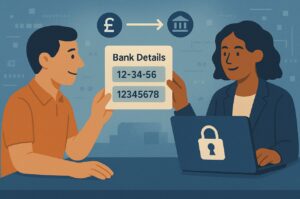
Setting up a Bacs payment depends on whether it is a Direct Debit or a Direct Credit.
For Direct Debits, the process begins by providing the organisation with the payer’s account details like name, address, sort code, and account number and authorising them to collect payments. This can be done online, over the phone, or by completing a paper form. Once set up, payments are taken automatically on the agreed dates.
For Direct Credits, such as receiving a salary, the recipient simply provides their sort code and account number to the payer. Once the payment is initiated and approved by the sender’s bank, it follows the standard Bacs three-day cycle.
Businesses wishing to send payments directly through Bacs need a Service User Number (SUN), which can be obtained from their bank. Smaller organisations can use a Facilities Managed (FM) service, where a third-party provider submits payments on their behalf.
How Much Does it Cost to Send a Bacs Payment?
Sending a Bacs payment is generally inexpensive, particularly for bulk transactions. The cost depends on the volume of payments, the bank, and whether a third-party provider is used. Receiving a Bacs payment is usually free.
For businesses processing thousands of payments a month, the cost savings compared to other payment methods can be substantial, making Bacs a financially attractive choice.
What Can cause a Delay in Receiving a Bacs Payment?
While the system is generally reliable, delays can happen. Common reasons include incorrect account details, missed cut-off times, public holidays, insufficient funds in the sender’s account, and additional security checks triggered by the bank.
Being aware of these factors allows both senders and recipients to troubleshoot quickly if a payment does not arrive when expected.
How Does Bacs Compare to Faster Payments and CHAPS?
Feature | Bacs | Faster Payments | CHAPS |
Processing Time | 3 working days | Within 2 hours | Same day (cut-off ~3pm) |
Cost | Low | Low | Higher |
Best Use | Payroll, regular supplier payments | Urgent transfers under £1M | High-value urgent payments |
Availability | Business days only | 24/7 | Business days only |
Bacs is best for predictable, scheduled transfers, whereas Faster Payments and CHAPS are better suited for urgent transactions.
How Can Organisations Start Using Bacs?

To begin sending payments directly through Bacs, a business must apply for a Service User Number via its bank. This process can take some time but provides flexibility and direct control over payments.
Alternatively, using a Facilities Managed service allows companies to send Bacs payments without having direct access to the Bacs network. The choice between the two often depends on payment volume, internal resources, and operational requirements.
Conclusion
In practice, a Bacs payment always takes three working days from submission to settlement, provided the payment meets the cut-off deadline. While it is not designed for urgent transfers, its predictability, cost-effectiveness, and security make it a cornerstone of UK banking.
By understanding the process, cut-off times, and potential causes of delay, individuals and businesses can plan payments with confidence and avoid disruptions to their financial schedules.
For businesses that want to simplify this process, Tunedin Payroll offers professional payroll services with integrated Bacs payment solutions for all industries, ensuring employees and suppliers are paid accurately and on time.
Frequently Asked Questions
Can a Bacs payment ever be same-day?
No. BACS follows a strict three-working-day cycle.
When should payroll payments be submitted through Bacs?
At least three working days before the intended payday, allowing for cut-off times.
What should I do if my Bacs payment is late?
Confirm details with the payer, check submission dates, and verify with the bank.
Is Bacs being replaced by Faster Payments?
Not at present. Both systems serve different purposes and will continue to coexist.
Are there limits on Bacs payments?
While individual banks may have limits, BACS itself can handle large bulk transactions.
Do Bacs payments work internationally?
No. Bacs only processes domestic UK payments.
How secure is Bacs?
Extremely secure. It is a regulated payment system that has been in operation for over 50 years.